Lotus 99T by Letbricks
Letbricks

More than 2150 PCS – LetBricks 1/8 Scale Lotus 99T of Ayrton Senna
A racing legend to build step by step:

From Alfa Romeo 179 to Tyrrell P34 6-Wheeler, Lotus 79 or Ferrari 126C2: thanks to RoscoPC, we can assemble these legendary F1 models ourselves. As MOCs, or My Own Creations, these are building block models developed and built by a genius like RoscoPC himself and made available to the wider market. Behind RoscoPC was Luca Rusconi from Italy, a Lego Technic Formula One Builder, as he called himself that way on his website. We were shocked as we read in early 2025 he passed away, his work and love for F1 cars will always remain forever.

One of his absolute insane builds is the legendary Lotus 99T. More than 2,150 parts and many hours of work later, this mighty piece stands before us, an absolute highlight! Pictures can hardly describe how incredibly powerful the final result looks with your own eyes, to touch and marvel at. You can order this and many other models from Letbricks. You will find the link at the very bottom of this article.

Lotus 99T by Letbricks
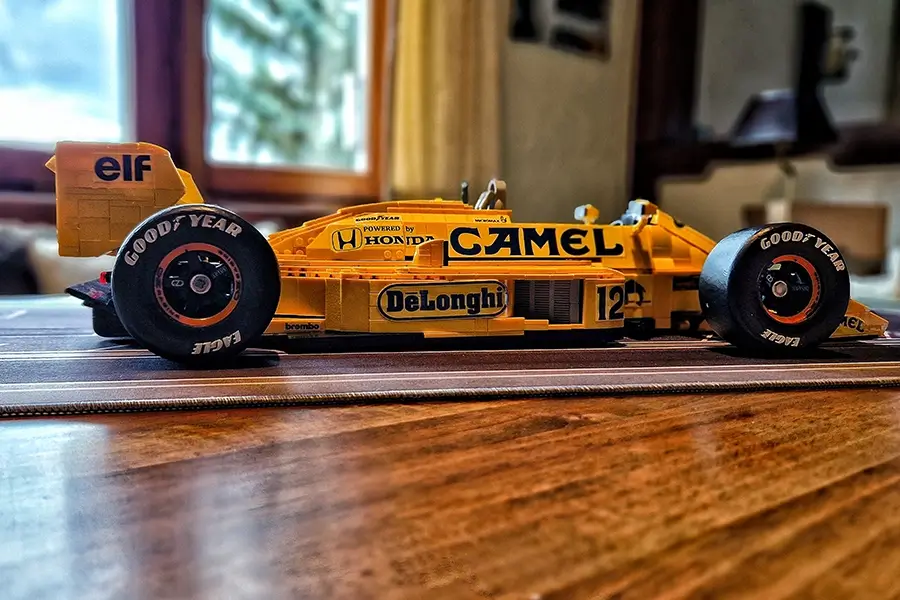
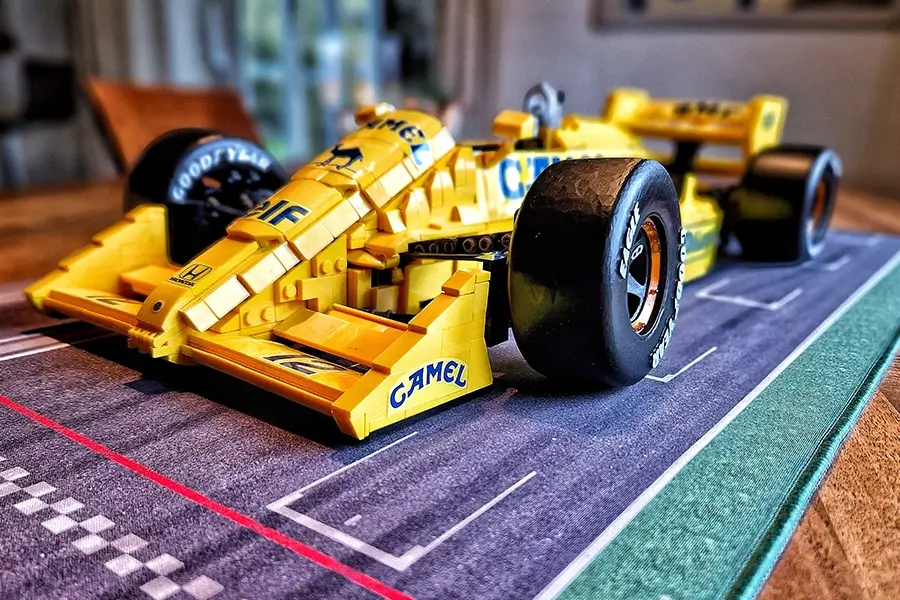
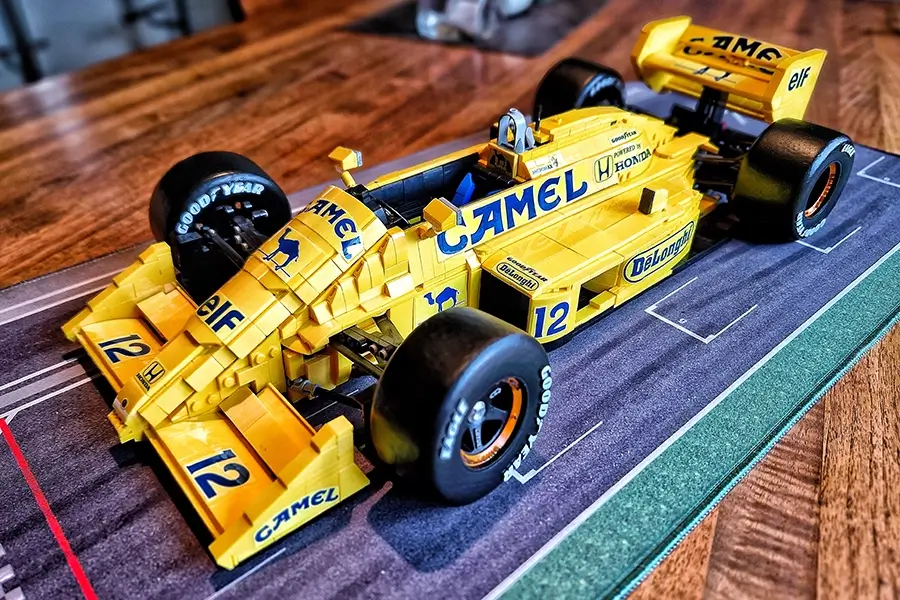
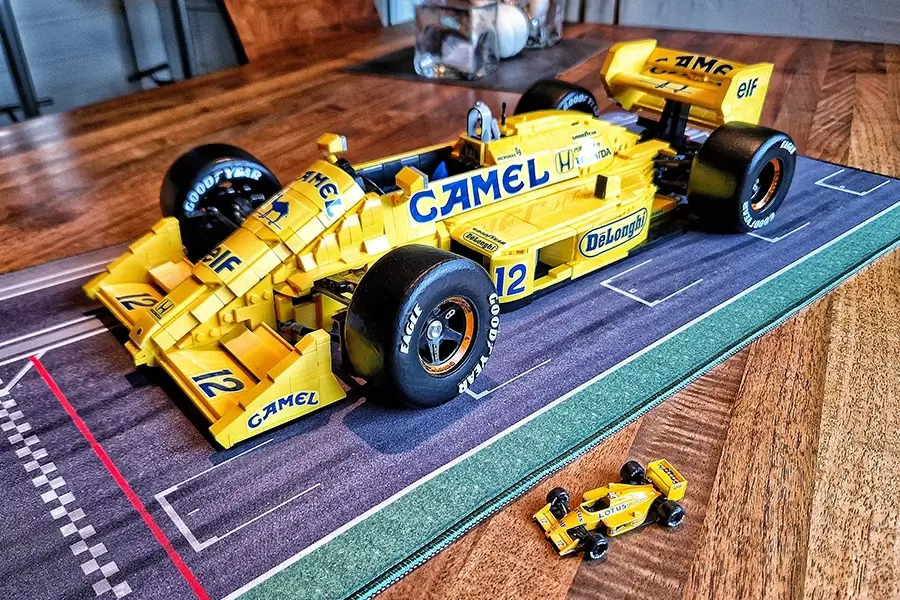
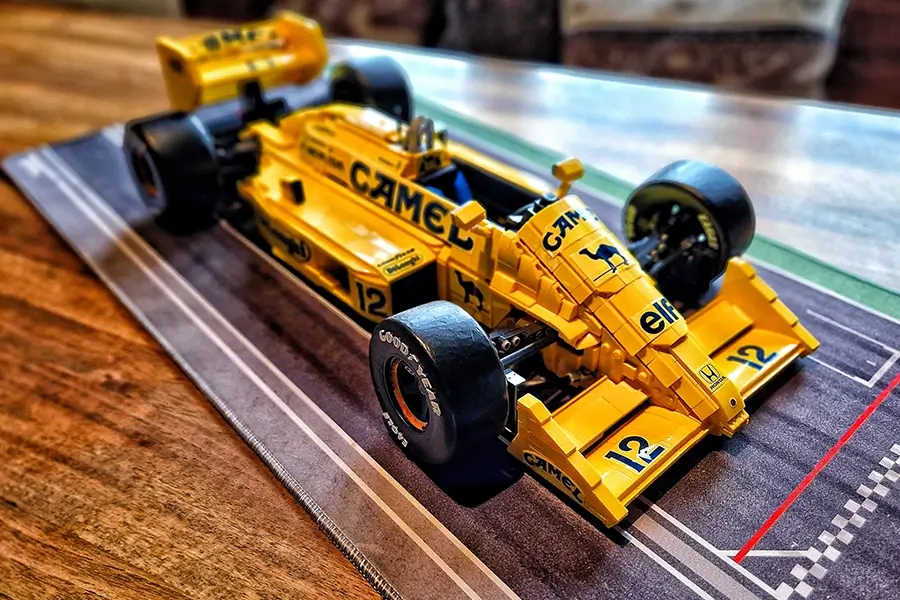
Just like the real thing: the 2,156 pieces are optimally assembled to accurately reproduce the typical look of the Lotus 99T. The pieces are not printed; a sticker sheet is included to make it look even more realistic.

How to put the cherry on top of this LetBricks model:

Admittedly, the 99T is practically perfect in this form. If there is anything to criticise, it is the tyres, and wheel choice, which are not really similar to the original. We can recommend the so called "Octopusbrickstore" to fix that, the link to which can be found at the very end of the article as well. Long story short: They offer you the unique opportunity to fit different wheels and tires to practically all RoscoPC models, matching the original.

Lotus 99T by Letbricks
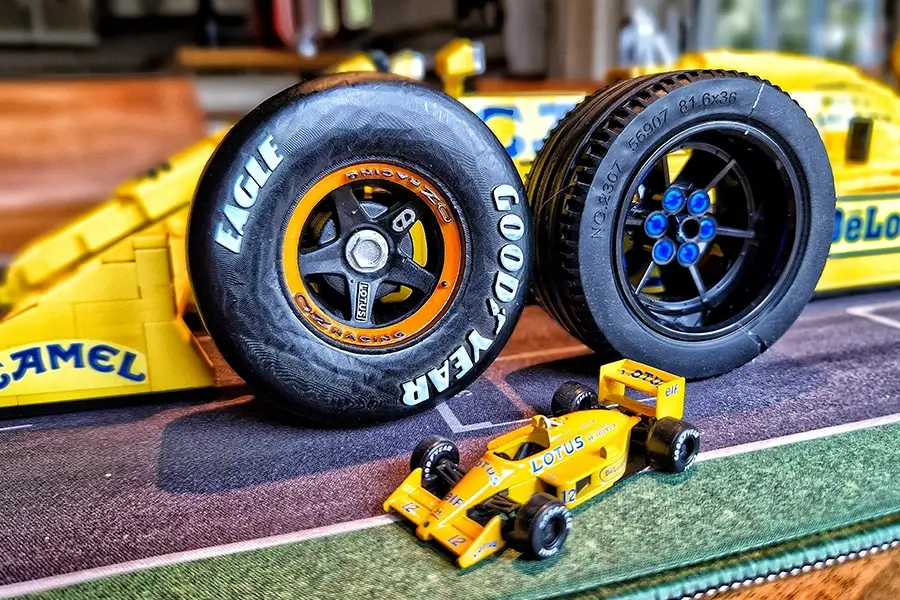
Left: The extremely accurate tyre and wheels combination with Lotus signature and OZ Racing sponsor for the model, right: the original rims from the set as a side to side compariso. The Kyosho model serves as a size comparison.

This makes the Formula 1 models look even more realistic and detailed! These wheels here are 3D printed samples and not rubber tyres, so a little caution is advised to mount them on. Plus you cant bounce them as a usual tire made of rubber logically. However, the wheels can be easily replaced in just a few simple steps. The matching steering wheel was also included to make the cockpit look just as good. With this set from Octopusbrickstore, you have now one of the best looking F1 cars of all time in the most accurate way as possible!

Lotus 99T by Letbricks
The steering wheel makes the model look even more realistic compared to a regular steering wheel. A cockpit view that is second to none!

The technical features of the Lotus 99T in a nutshell:

Unveiled in London on 3 February 1987, the Lotus Type 99T was the first Lotus Formula 1 car powered by a Honda turbo engine. The 99T used computer-controlled active suspension, a technology pioneered by Lotus in 1983, now more mature and effective due to better and more advanced computer systems and the more powerful turbo charged engine of the era. The combination gave drivers Ayrton Senna and Satoru Nakajima a car that could stay flat over bumps, preserve tyres, and run less wing for more top speed. So if you are wondering why this LetBricks Lotus Model sits so low on the ground and basically scratches the tarmac: there you got the answer.

Lotus 99T by Letbricks
Not a millimetre more space between the underbody and the tarmac: the Lotus 99T really makes the most of every inch, which is perfectly reflected in the model, especially when viewed from the side.

The famous black and gold of JPS made way for Camel’s yellow and blue livery. It turned the Lotus 99T 1987 into one of the most recognisable machines of the decade.   Lotus developed Active Suspension with a Lotus Esprit research car before applying the technology to the Lotus Type 92 in 1983. Four additional years of work culminated in the active suspension on the Lotus 99T where computer-controlled hydraulics and actuators worked together for optimum ride height.

Visually, the most obvious new feature of the 99T was the trademark yellow of new sponsor Camel. However, there was a lot more going on with this Lotus F1 car than met the eye. The real difference with previous designs – the 95T, 97T and 98T – was found under the skin. At the heart of the 99T sat Honda’s RA166E 1.5-litre V6 turbo. To accommodate the Honda engine, a new carbon fibre/Kevlar chassis had to be produced. The wide power band of this high-revving engine also required a new gearbox, so Lotus and Hewland developed a new 6-speed gearbox. Fun fact: You also build the engine completely from zero at your LetBricks model. If you are brave enough you can remove the engine cover with a few steps to see the six cylinders moving while pushing the model forward and backward.

The ‘flat-running’ of the car ensured each tyre’s contact patch with the track was as large as possible. In addition, reduced tyre wear meant the 99T could run with less wing, boosting top speed on the straights. The car bore a strong resemblance to its predecessors. But with a smaller engine cover and narrower side pods it was slightly sleeker. The team conducted extensive wind tunnel tests, but the big news was the undeniable vibrant appearance of the car due to RJ Reynolds’ Camel colours replacing those of JPS. On the stickersheet you get all the relevant sponsors from Camel, DeLonghi, elf and more. At the end its up to you if you want to keep your model clean and leave it all blank or put all the stickers on the chassis one by one.

Lotus 99T by Letbricks
The stickers make the model look even more realistic. It might have been better to make the background transparent, as the yellow tone differs visually from the rest depending on the light. Personally, it didn't bother us, and the transparent idea probably wouldn't have been any better.

What about the drivers?

The Type 99T got off to a poor start, with Ayrton Senna – driving on his home turf of Brazil – failing to finish. He managed to take pole at San Marino but due to concerns about fuel supply issues, Senna settled for 2nd place after Nigel Mansell’s Williams, powered by the more advanced 1987 Honda engine, whereas Lotus had to make do with the 1986 Honda engine.

Monaco 1987: Ayrton Senna’s first win with the 99T Performances started to improve and he took the flag in stunning fashion at Monaco. A feat he repeated on the streets of Detroit. It marked the 79th and, ultimately, final Grand Prix win for Team Lotus. Senna managed to get podiums at Silverstone and Hockenheim, runner-up finishes at San Marino, Japan, and Australia, although Adelaide was later disallowed after stewards objected to the car’s brake-cooling ducts.

Detroit 1987: Senna’s last Lotus Grand Prix victory But that 1987 victory in Detroit – on the bumpy, tight and technically demanding downtown streets of America's Motor City – has become legendary. Senna’s last Lotus win was a true showcase of the technical capabilities of Lotus Type 99T.

The 99T delivered two wins and a string of podiums that kept Team Lotus competitive against Williams with the superior and more advanced version of the Honda engine cars. The points tally demonstrates consistent front-running pace and a clear advantage on circuits that suited the car’s increased cornering speed. Team Lotus set out to compete for the titles in the 1987 Formula 1 season and Senna’s performances in the 99T were enough for him to secure 3rd place in the Drivers’ Championship, behind series winner Nelson Piquet and runner-up Nigel Mansell — both driving for Williams.

Lotus 99T by Letbricks
The model is dedicated especially to Senna, as the sticker sheet only has the number 12 and his name ready for the cockpit. Many people will not necessarily be familiar with the name of the second driver, as Senna simply outshines everything else.

Active Suspension Formula 1 Legacy

By winning at the prestigious Monaco GP and on the tough streets of the Detroit GP, the Lotus 99T validated active suspension at the peak of Formula 1 performance. It demonstrated how stability, tyre preservation and aero consistency could translate into real race-day advantage. This is also reflected in the model, because the construction of the suspension in particular is quite challenging, but at the same time very interesting and instructive. In 1987, Senna used the unique strengths of the 99T F1 car to full effect. His victories in Monaco and Detroit earned their place in history as masterclasses in precision and control. Two trademark wins that marked the final Lotus GP victories of his career. Satoru Nakajima’s late F1 debut Second driver behind Senna was Honda favourite Satoru Nakajima, who made his F1 debut at 34. He was no match to his front man’s class and racing pace, but contributed points and valuable development input in the first year with Honda power and active suspension. (Src: Lotuscars)

Lotus 99T by Letbricks
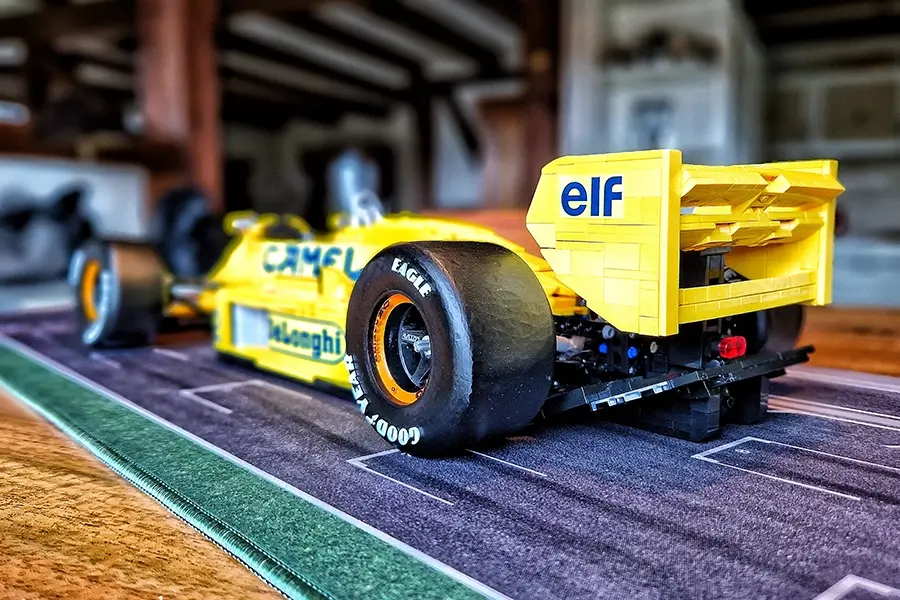
Even the rear wing is movable and the angle of the upper cross strut can be adjusted, just like in real life back then, when adjustments were made to the aerodynamics and engine depending on the track and type (race and qualifying).

As you can see, the fascination with the Lotus 99T is boundless. Especially during the construction of the model, you will be absolutely amazed by the technical details and designs – at least that's how we felt! The ideal pastime during rainy days or a tedious Formula 1 race in Monaco.

Leave a Reply

Your email address will not be published. Required fields are marked *