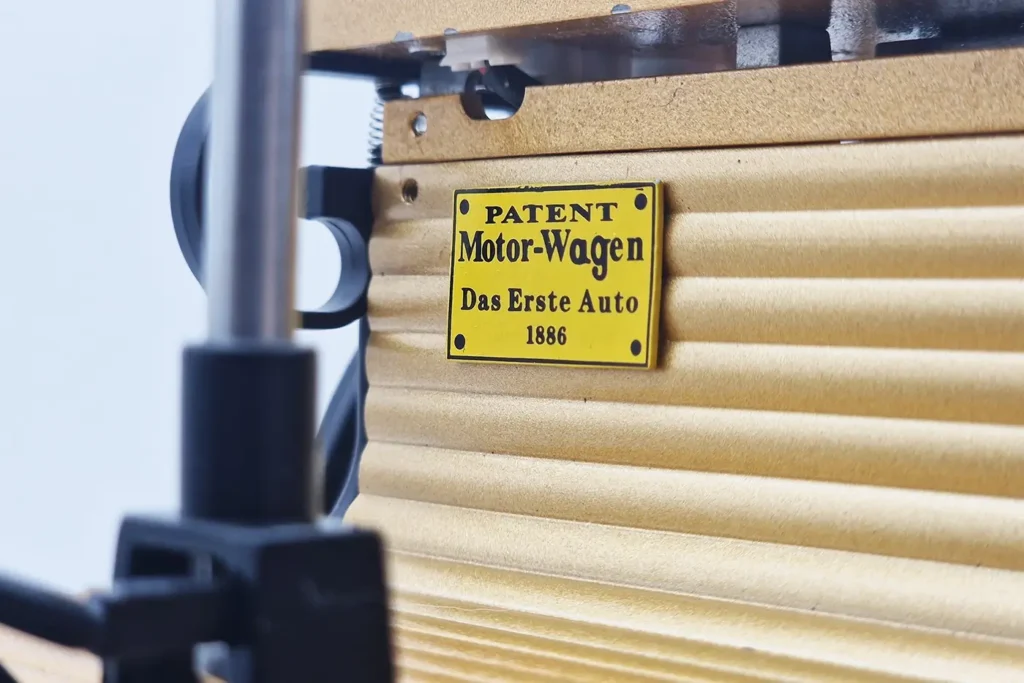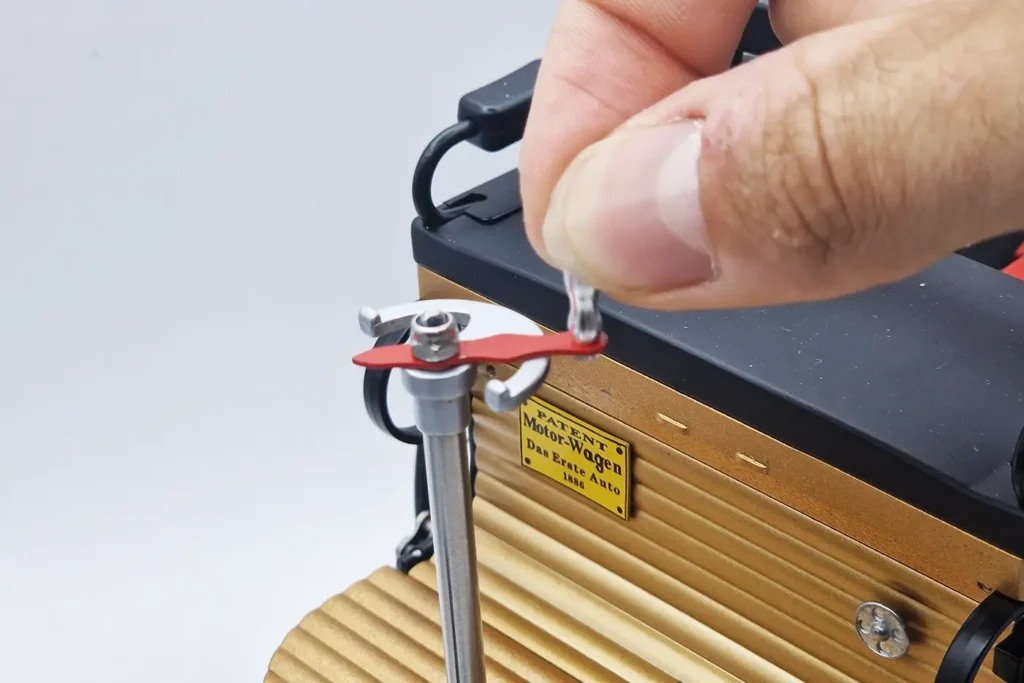
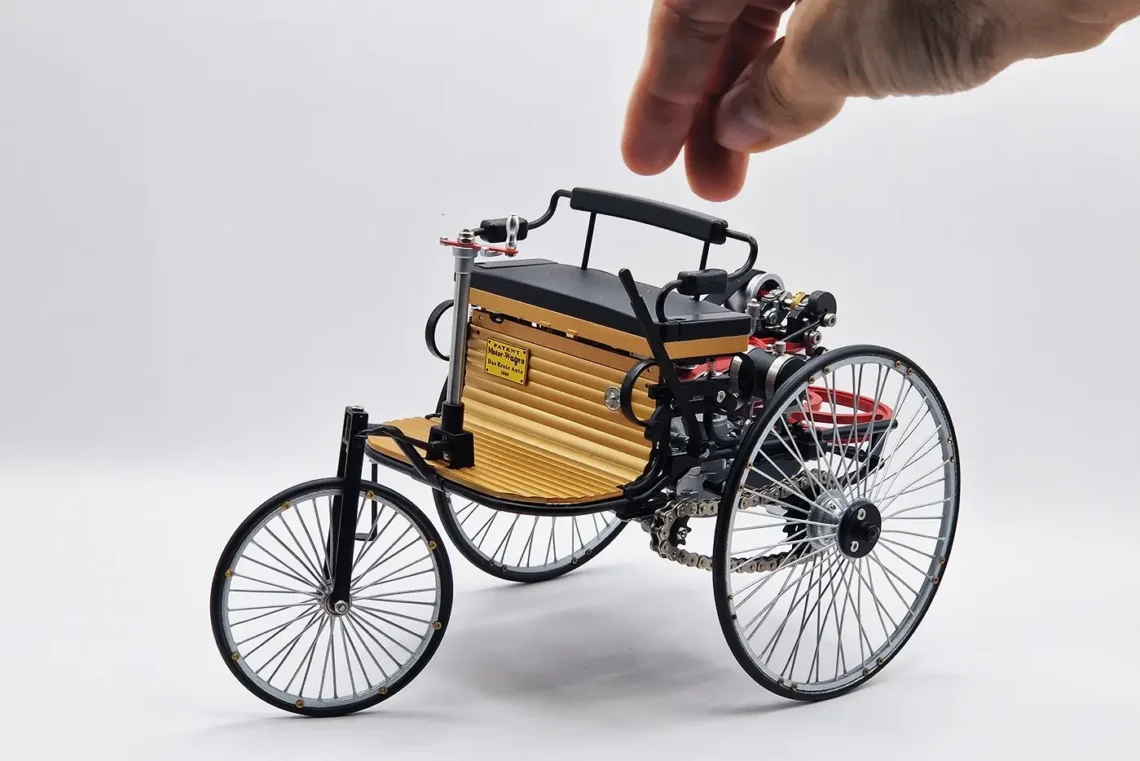
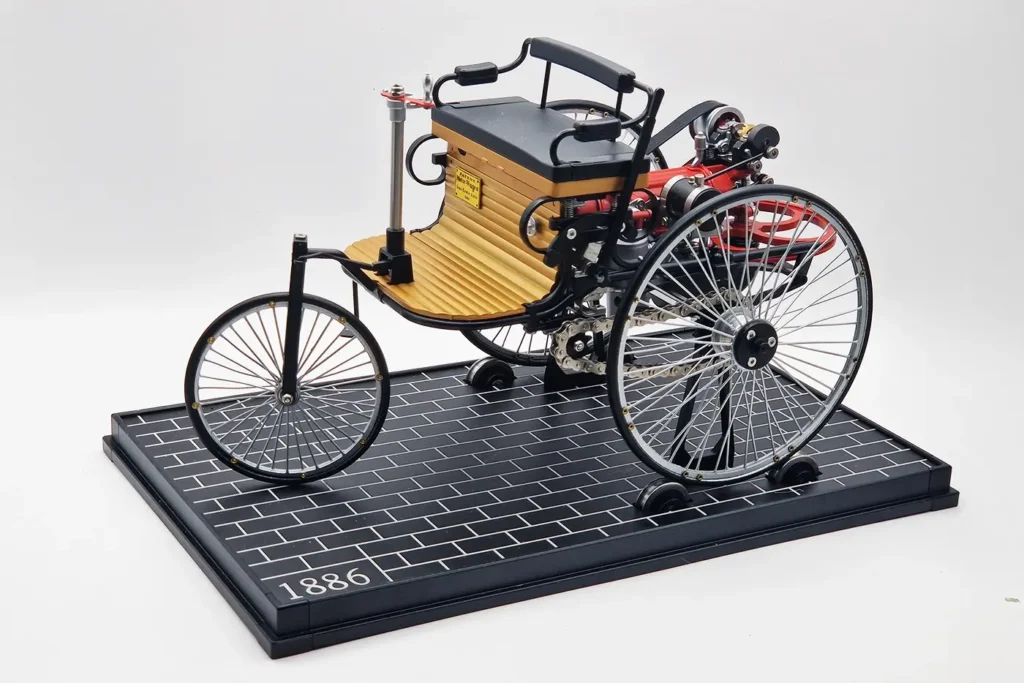
TECHING Benz Patent-Motorwagen 1886 – The car that started it all as 430pcs model kit
A Journey to the Birth of the Automobile
Every car on the road today – from compact city cars and luxury saloons to Formula 1 racers and electric hypercars – owes its existence to one remarkable invention. Long before automotive giants such as Ferrari, Porsche, Mercedes-Benz or Toyota became household names, a visionary German engineer introduced a machine that would change transportation forever. That machine was the Benz Patent-Motorwagen.
Officially patented on 29 January 1886, it is widely recognised as the world's first true automobile powered by an internal combustion engine. Unlike earlier experiments that simply added engines to horse-drawn carriages, Carl Benz designed the Patent-Motorwagen as a complete vehicle from the ground up. Every component – from its lightweight chassis to its engine and steering system – was created to work together as one innovative concept.
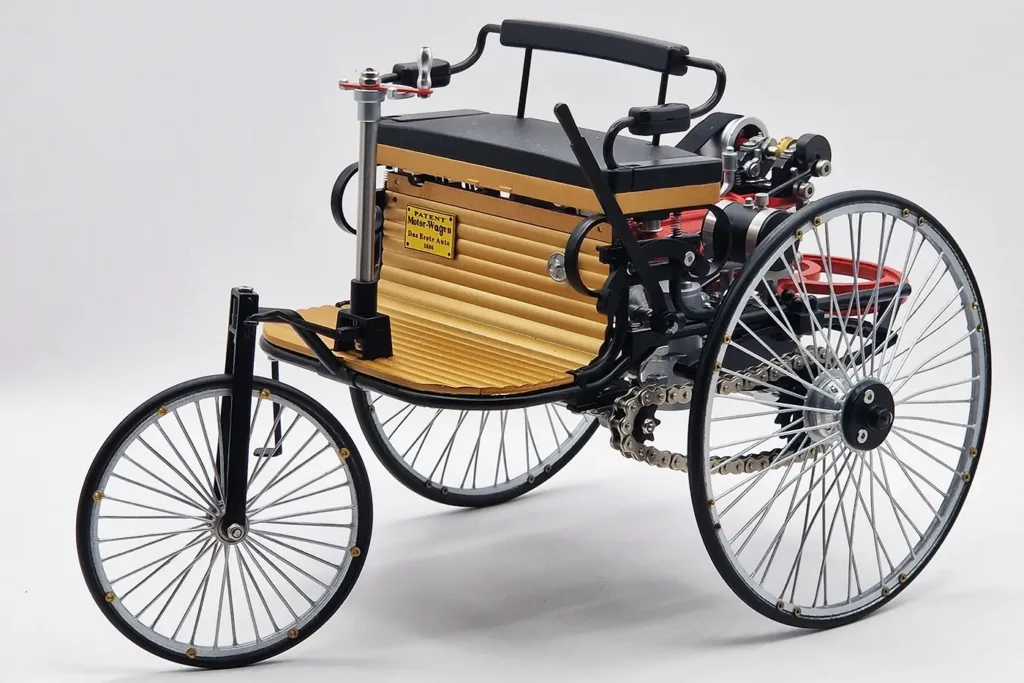
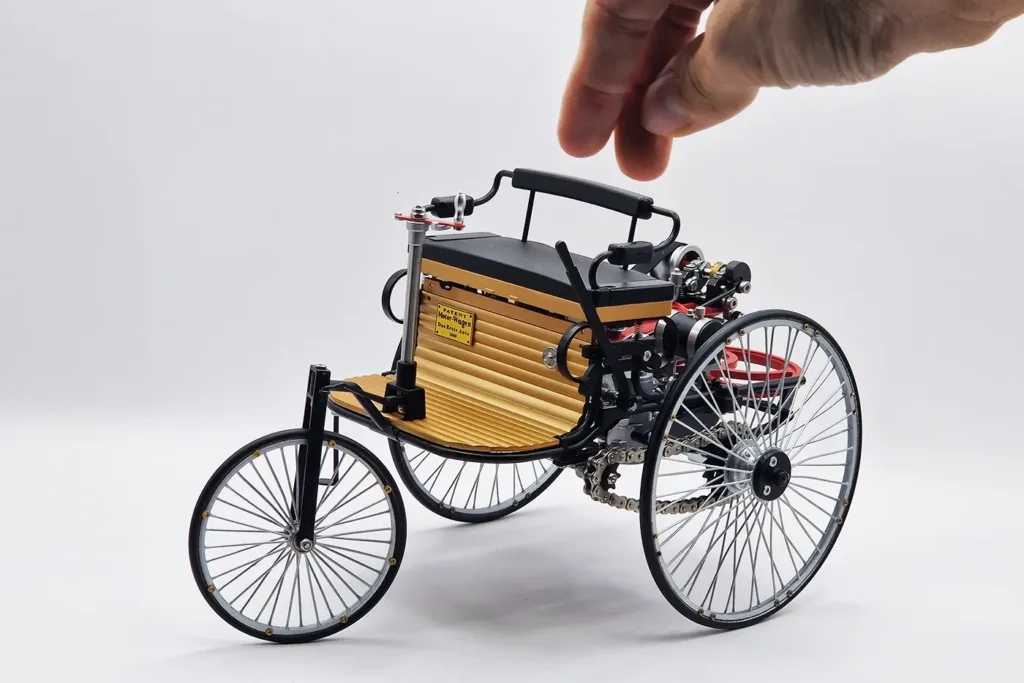
By modern standards, the Patent-Motorwagen looks surprisingly simple. It rides on three large wire-spoked wheels, features a wooden bench instead of comfortable seats and is powered by a single-cylinder engine mounted behind the passengers. There was no steering wheel, no gearbox as we know it today and certainly no electronic driving aids. Yet despite its modest appearance, this three-wheeled machine marked the beginning of an entirely new era.
The story behind the Patent-Motorwagen is about far more than engineering. It is a tale of determination, innovation and the courage to challenge conventional thinking at a time when horses ruled the roads and few people believed that motorised transportation had a future.
More than 140 years later, the Benz Patent-Motorwagen continues to inspire automotive enthusiasts around the world. It represents the very first chapter of an industry that would eventually produce some of the greatest cars ever built.
For diecast collectors, it holds a special place as well. While it may not have the aggressive styling of a modern supercar or the racing pedigree of a Le Mans prototype, owning a miniature version of the Patent-Motorwagen means owning a small piece of automotive history. It reminds us where every incredible automotive journey truly began.
The World Before the Automobile
To understand just how revolutionary the Patent-Motorwagen was, we need to step back into the late nineteenth century. During the 1880s, horses dominated transportation. Whether travelling through city streets, delivering goods or embarking on long-distance journeys, almost every form of land transport relied on animal power. Although reliable, horse-drawn vehicles were slow, expensive to maintain and heavily dependent on weather and road conditions. Growing cities also faced increasing sanitation problems. Thousands of horses produced enormous amounts of waste every day, making urban life far less pleasant than we might imagine today. Steam power had already transformed railways and industry, but steam-powered road vehicles remained impractical. They were heavy, slow to prepare for operation and required frequent stops for water. Electric vehicles also existed in experimental form, but battery technology was still far too limited for practical everyday use. Many inventors searched for a better solution. Among them was Carl Benz, an engineer who believed that the internal combustion engine could completely change personal transportation. Unlike many of his competitors, he didn't simply want to replace the horse with an engine. Instead, he envisioned an entirely new type of vehicle designed specifically around its powertrain. It was a bold idea at a time when few people believed that self-propelled road vehicles could ever become practical. Yet Carl Benz remained convinced that the future belonged to machines rather than horses. That belief would soon change the world forever.
Carl Benz – The Visionary Behind the World's First Automobile
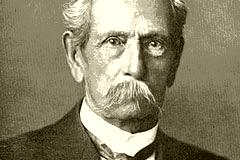
Every revolutionary invention begins with someone willing to challenge the status quo. For the automobile, that person was Carl Benz. Born on 25 November 1844 in Karlsruhe, Germany, Carl Benz showed a passion for engineering from an early age. Despite growing up in modest circumstances after the death of his father, he excelled in mathematics and mechanics. His determination eventually led him to study mechanical engineering at the Polytechnic School in Karlsruhe, where he graduated at just 19 years old. Following his studies, Benz gained valuable experience working for several engineering companies. However, his ambition reached far beyond improving existing machines. He dreamed of creating something entirely new—a vehicle capable of moving independently without horses or steam. His early career was anything but easy. Financial struggles, failed business ventures and sceptical investors repeatedly threatened his ambitions. Yet one person never stopped believing in him: his wife, Bertha Benz. More than simply a supportive partner, Bertha became one of the driving forces behind Carl's success. She invested her own inheritance into his business when funding was desperately needed and encouraged him to continue developing his ideas during difficult times. Without her unwavering confidence, the history of the automobile might have looked very different.
Carl Benz focused his efforts on perfecting the internal combustion engine before designing the vehicle itself. He believed that a reliable engine was the key to creating practical personal transportation. Once he had developed a dependable single-cylinder four-stroke engine, he began designing an entirely new vehicle around it. This decision proved to be revolutionary. Rather than modifying an existing horse-drawn carriage, Benz engineered every component specifically for motorised travel. The lightweight tubular frame, steering mechanism, drivetrain and engine were all designed to work together as a complete system. Today, this approach seems obvious, but in the 1880s it represented a completely new way of thinking. Years of testing, redesigning and problem-solving finally paid off. On 29 January 1886, Carl Benz received German Patent No. DRP 37435 for his "vehicle powered by a gas engine". This document is widely recognised as the birth certificate of the modern automobile and marked the official beginning of automotive history. Although the invention was groundbreaking, convincing the public proved to be another challenge. Many people viewed the noisy machine with suspicion, while others doubted it would ever replace the dependable horse. Little did they know that this unusual three-wheeled vehicle would become the foundation for one of the world's largest industries. Every car built since—from elegant classics and rugged off-roaders to today's high-performance supercars—can trace its origins back to Carl Benz's remarkable vision. His invention wasn't simply the first successful automobile. It changed the way humanity would travel for generations to come.
The Benz Patent-Motorwagen – A Revolutionary Machine
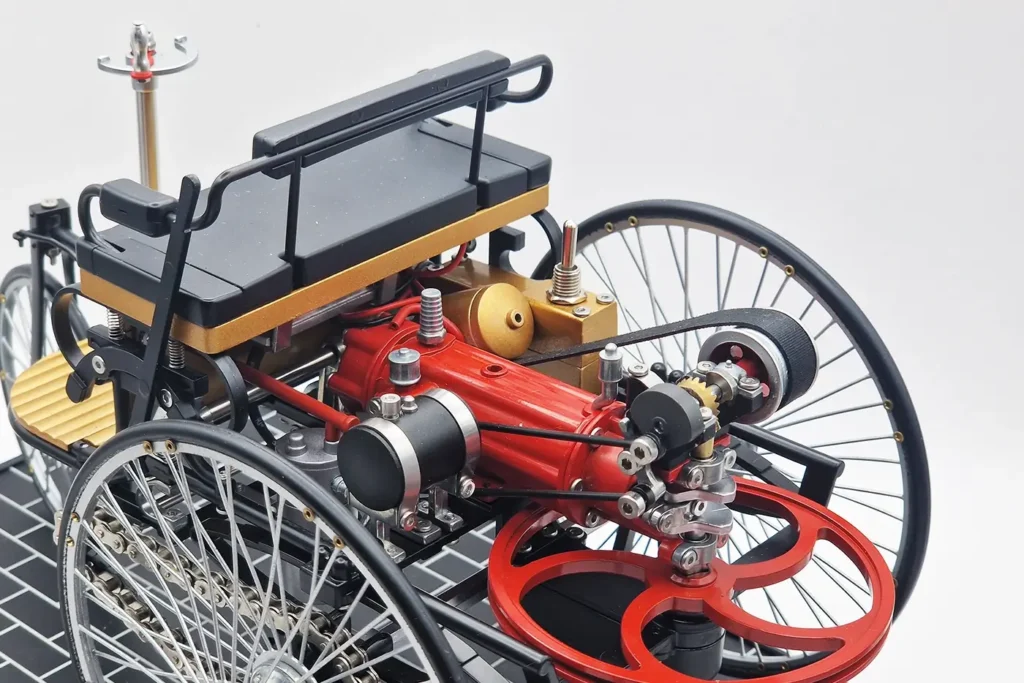
At first glance, the Benz Patent-Motorwagen might look more like a horse carriage than a modern automobile. Its three large wire-spoked wheels, wooden seat and exposed mechanical components appear incredibly simple compared to today's vehicles. Yet beneath that modest design was one of the most advanced engineering achievements of the nineteenth century. Rather than adapting an existing carriage, Carl Benz designed the Patent-Motorwagen from the ground up as a self-propelled vehicle. This decision allowed every component to work together efficiently and solved many of the problems that earlier experimental vehicles had encountered. Power came from a single-cylinder four-stroke petrol engine mounted horizontally at the rear of the vehicle. Producing around 0.75 horsepower, it may seem insignificant by modern standards, but in 1886 it was an extraordinary achievement. The engine was capable of pushing the lightweight vehicle to a top speed of approximately 16 km/h (10 mph), making it perfectly suitable for the roads of its time.
Starting the engine required considerably more effort than simply pressing a button. The large flywheel had to be turned by hand before the engine came to life. Fuel was supplied through a simple evaporation carburettor, while cooling was achieved using an evaporative water system. Every journey required careful preparation, and drivers needed a good understanding of the machine they were operating. The Patent-Motorwagen also introduced several engineering solutions that would influence automobile design for decades. It featured electric ignition, chain-driven power transmission and a differential system that helped transfer power to the rear wheels. Although these components seem commonplace today, they represented groundbreaking innovations during the late nineteenth century.
Steering was equally unique. Instead of a steering wheel, the driver controlled the front wheel using a hand-operated tiller. This design offered far greater precision than many early experimental vehicles and made the Motorwagen surprisingly manoeuvrable for its era. One reason the vehicle performed so well was its relatively low weight. Thanks to its tubular steel frame and carefully engineered construction, the Patent-Motorwagen weighed only around 265 kilograms. Combined with its compact engine, this allowed the vehicle to travel efficiently despite its limited power output. Only a small number of Patent-Motorwagens were ever produced, but each version introduced improvements based on real-world experience. Carl Benz continuously refined the design, increasing reliability and usability as he gained valuable feedback from testing and early customers.
Looking back today, the specifications may appear modest. Modern family cars produce hundreds of times more power, offer advanced safety systems and travel at speeds Carl Benz could scarcely have imagined. Yet none of those achievements would have been possible without this pioneering machine. The Benz Patent-Motorwagen wasn't built to break speed records or impress with luxury. Its true achievement was proving that personal motorised transportation could become a practical reality. It laid the engineering foundations for every automobile that followed and transformed what had once seemed like an impossible dream into the beginning of a global revolution. For automotive enthusiasts and diecast collectors alike, that's what makes the Patent-Motorwagen so special. It isn't remembered because it was the fastest or most powerful vehicle of its time—it is remembered because it was the first to show the world what the future could look like.
Bringing History to Life – The TECHING Benz Patent-Motorwagen Model Kit
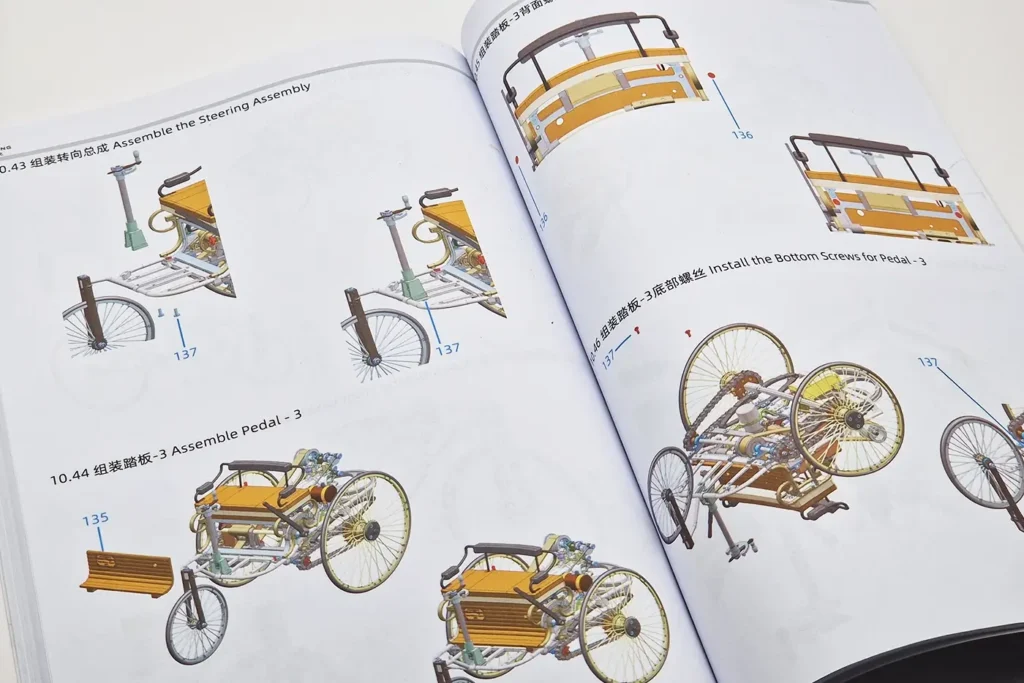
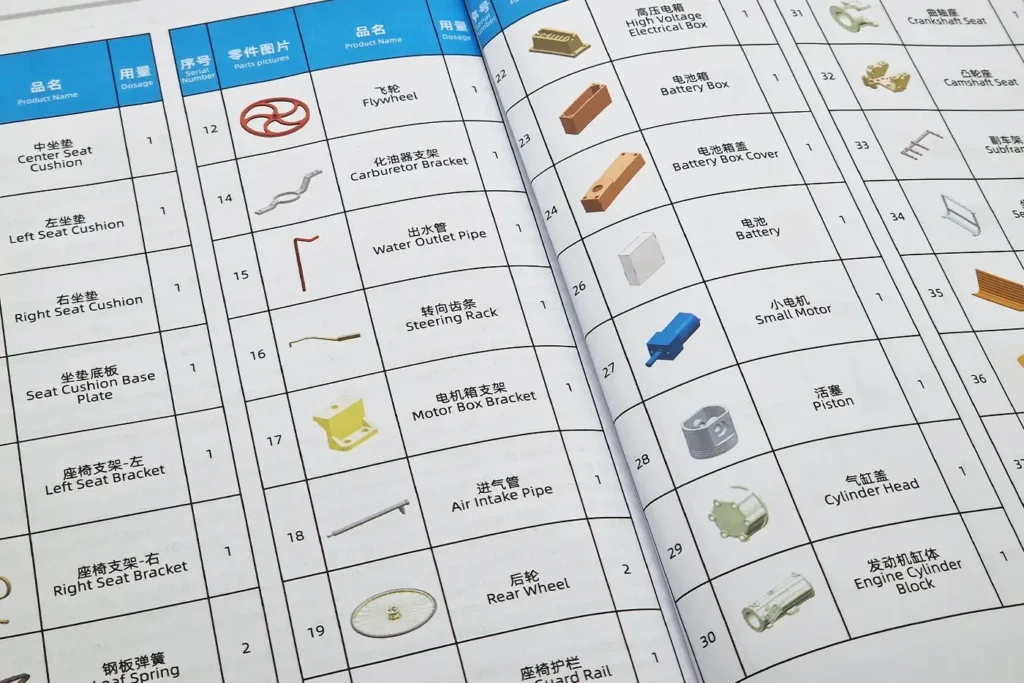
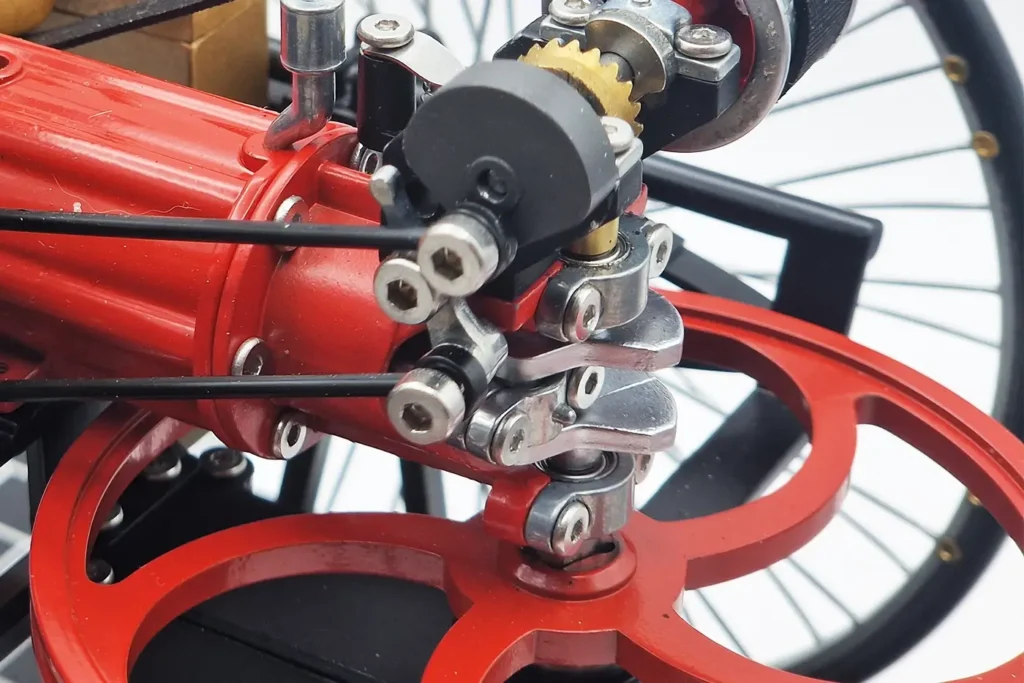
For most automotive enthusiasts, the Benz Patent-Motorwagen is a vehicle to admire in museums or history books. But what if you could build one yourself and discover exactly how the world's first automobile worked? That's precisely what the TECHING Benz Patent-Motorwagen Model Kit offers. Rather than producing a simple static display model, TECHING has recreated the legendary three-wheeled automobile as an intricate all-metal construction kit consisting of more than 430 precision-engineered parts. Every stage of the assembly reveals another piece of automotive history, allowing builders to appreciate the ingenious engineering solutions Carl Benz developed nearly 140 years ago. One of the highlights of the model is its visible mechanical layout. Just like the original Patent-Motorwagen, the engine, drivetrain and steering system remain fully exposed, making it easy to understand how power is transferred through the vehicle. Instead of hiding the mechanics beneath body panels, the model celebrates them—exactly as carl Benz intended with his pioneering design.
The model faithfully captures many distinctive features of the original automobile, including the large flywheel, tiller steering, slender tubular frame and iconic three-wheel configuration. Once assembled, the electric motor drives the mechanism, allowing the moving components to be observed in action. It transforms what could simply be a display piece into an engaging demonstration of nineteenth-century engineering principles. For collectors, this makes the kit far more than another model on the shelf. Building it provides a genuine appreciation for the challenges Carl Benz faced when creating the world's first practical automobile. Every gear, linkage and rotating component serves as a reminder that modern automotive engineering began with remarkably simple—but incredibly clever—mechanical solutions.
Whether you're passionate about automotive history, mechanical engineering or simply enjoy assembling high-quality model kits, the TECHING Benz Patent-Motorwagen offers a unique experience. It bridges the gap between history and hands-on craftsmanship, allowing enthusiasts to interact with one of the most important vehicles ever created in a way that few museum exhibits can offer. For us as diecast collectors, it's also a refreshing addition to a collection filled with modern supercars and race cars. While it may not feature hundreds of horsepower or dramatic aerodynamic bodywork, it represents something even more important: the very beginning of the automotive story. Every Porsche, Ferrari, McLaren or Formula 1 car sitting in our display cabinets exists because one visionary engineer dared to build a three-wheeled machine that proved the impossible was possible.